Newborn photographers get babies to sleep with a warm room, a full feed, a snug wrap, gentle handling and plenty of patience. At Tender Beginnings in Richboro, PA, I never force sleep: we follow your baby’s natural rhythm and pose only when they are fully asleep.
This guide covers what actually helps a newborn sleep during a photoshoot, and what to avoid. To see how a full session works, the Tender Beginnings homepage shows every session type.
Why Photographers Want Deep Sleep
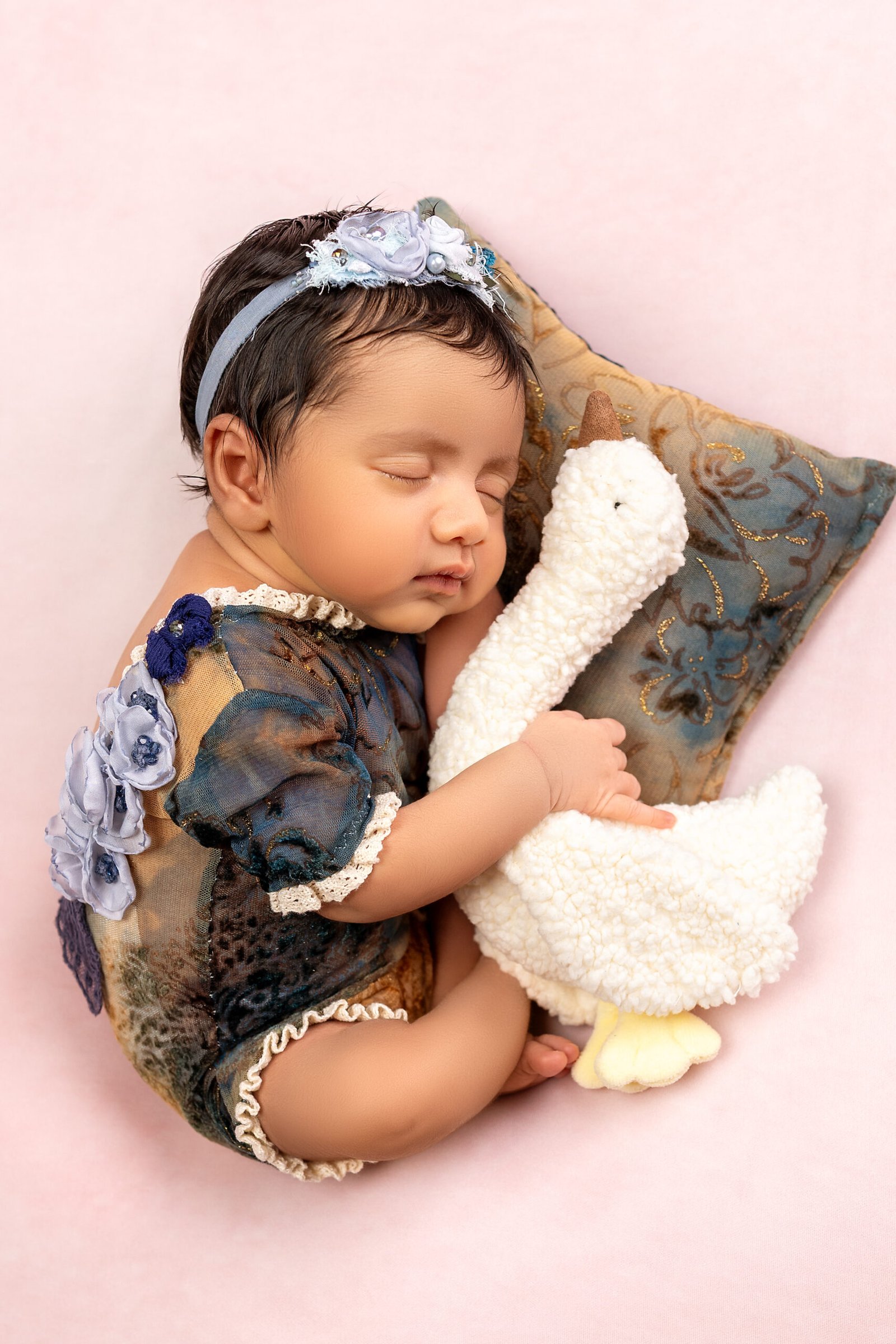
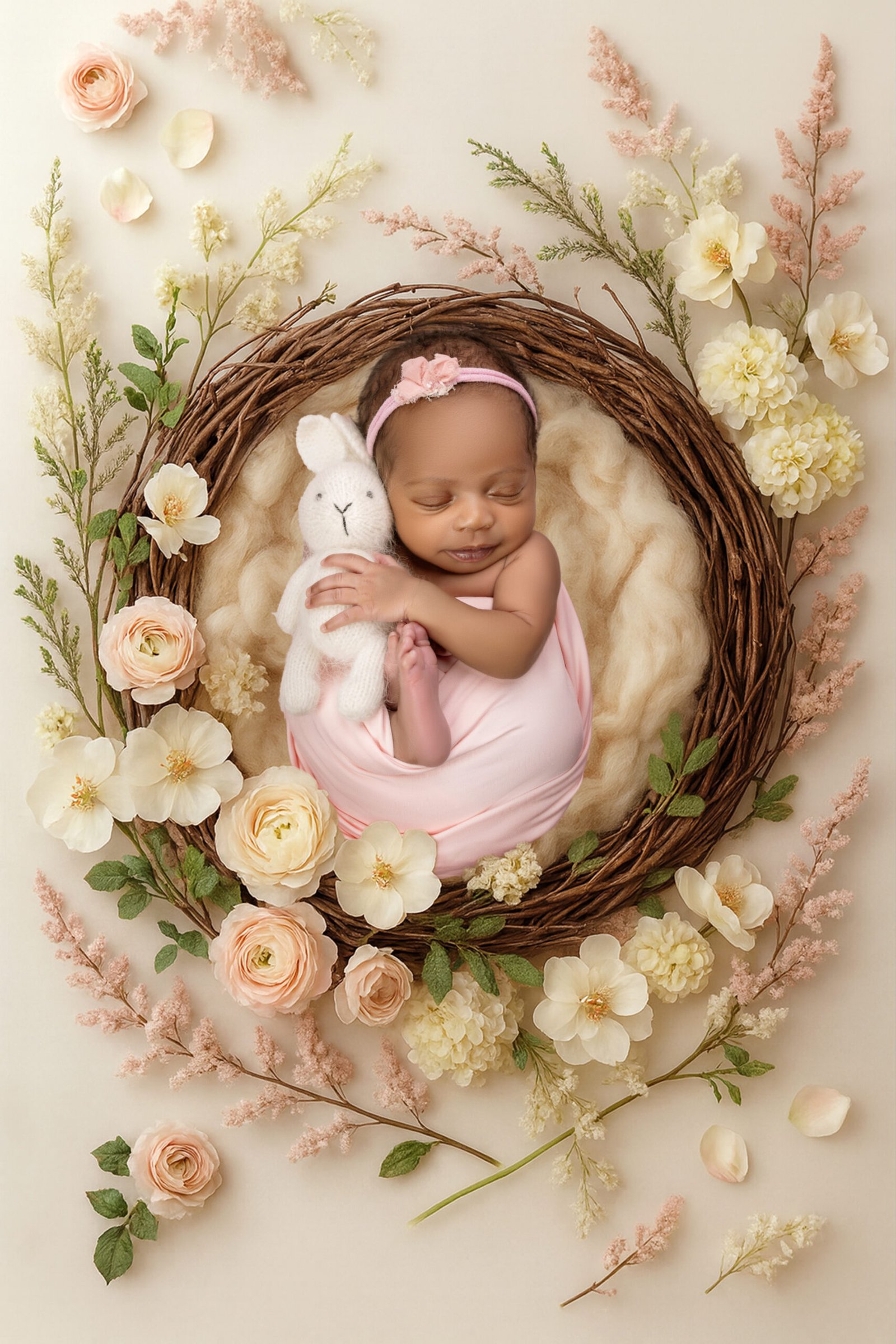
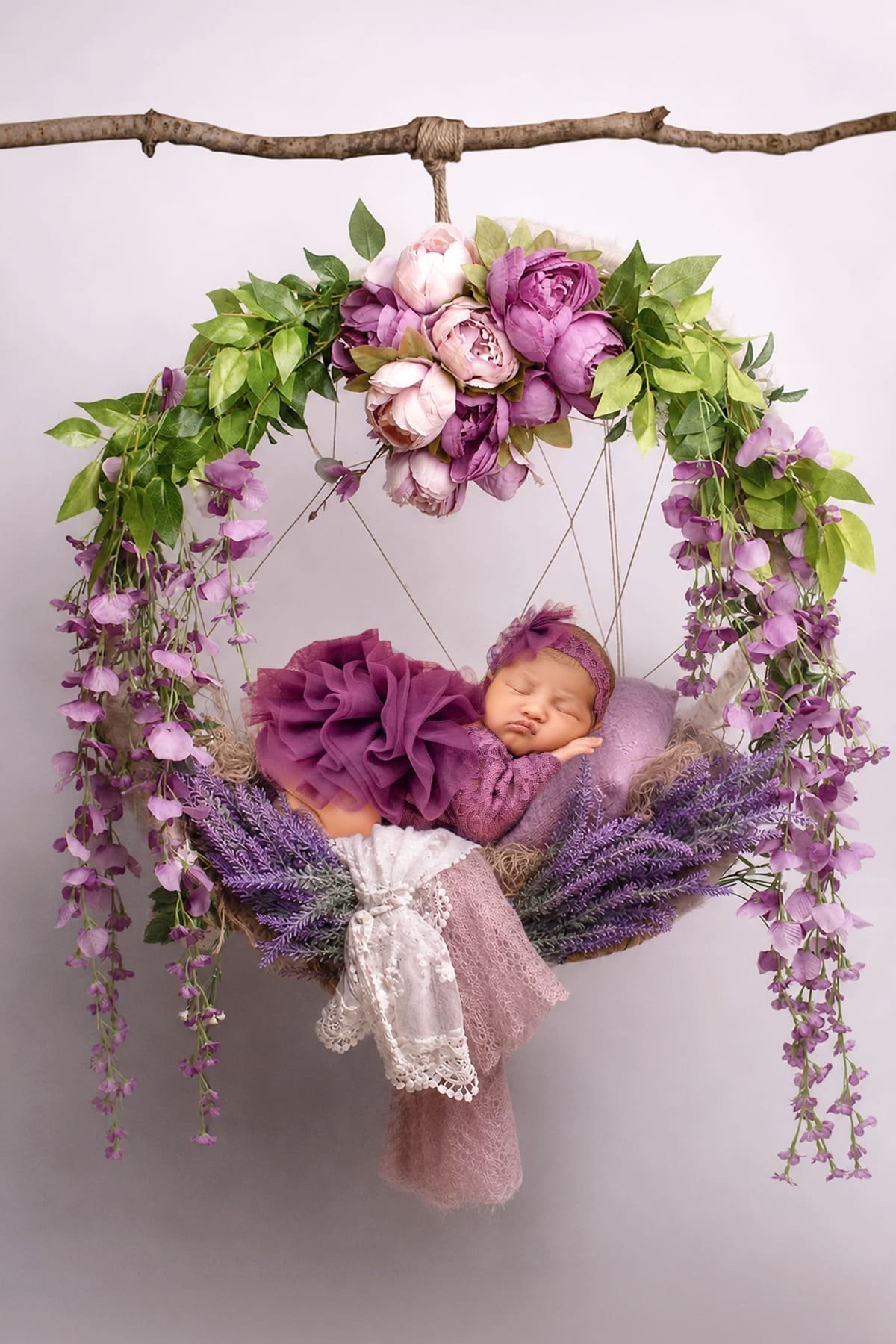
Most classic newborn portraits, such as curled-up poses and intricate wraps, require a baby who is in a deep, peaceful sleep. A sleeping newborn has relaxed fingers, a soft face, and limbs that rest gently where positioned.
Posing only when a baby is deeply asleep is also an essential safety standard, ensuring their joints and neck are never strained. I explain the clinical side of safe posing in my newborn photography safety guide.
A Warm Room Comes First
Newborns cannot regulate their own body temperature easily, especially when undressed for wraps. A chilly baby startles, tenses their muscles, and wakes up. That is why my studio is kept warm (around 75-80°F) all year round, even during a Pennsylvania summer. That cozy warmth relaxes their nervous system just like a warm bath.
Parents often feel quite warm in the studio, which is a great sign that the climate is right for the baby. I always recommend dressing in light, breathable layers so you stay comfortable.
Why a Full Tummy Helps
A baby with a full tummy is naturally drowsy and content. I recommend offering a feeding shortly before we start, and we pause to feed again whenever your baby shows hunger cues. Feeding pauses are never treated as lost time – you can see a full timeline breakdown in how long a newborn session takes.
Snug Wraps and Gentle Touch
Newborns startle easily from the Moro reflex, where their own sudden arm twitches wake them from sleep. A secure, breathable wrap mimics the familiar containment of the womb, helping them remain settled.
Transitions between setups are slow and deliberate. A spotter’s hand remains within reach of your baby during every pose. Rushing is the number one reason a sleeping infant wakes up, so we keep every movement gradual.
Quiet Sounds and Calm Handling
I keep the studio peaceful, speak softly, and use gentle white noise to mask sudden sounds. Studio strobes are diffused through large softboxes, creating soft, flattering light without harsh glares or heat near your baby’s eyes.
Most babies sleep peacefully through the soft clicks of the camera, as they are accustomed to the muffled, continuous sounds of the womb.
Calm Parents, Calmer Baby
Infants are intuitive and absorb tension around them. If parents feel anxious about whether the baby will sleep, the baby often senses that stress. The most helpful thing you can do is relax, enjoy resting on the couch, and let me guide the morning.
Cuddling in parents’ arms is our best tool. Many babies fall asleep draped over a parent’s shoulder, and I transition them to the posing area once they reach deep sleep. If your baby prefers staying in your arms, that is completely fine – those cuddles make breathtaking family portraits.
“Sleep cannot be rushed, but it can always be invited.”
Common Tips vs What I Do
| Common Online Tip | My Studio Practice |
|---|---|
| Heated environment | Always maintained at 75 – 80°F year-round |
| Full feeding beforehand | Yes, and repeated whenever baby asks |
| Tight swaddles | Breathable, organic wraps used only while asleep |
| Must bring a pacifier | Never required; we soothe naturally |
| White noise machine | Used gently when it helps mask studio sounds |
| Using sleep aids or drops | Never. Natural settling and feeding only |
Arrival Time and Wake Windows
Aim for a session start time when your baby is typically drowsy after a feed. An overtired newborn can become overstimulated, while a baby who just woke from a deep two-hour nap may be wide awake. You do not need to disrupt your baby’s routine – share their general patterns with me, and we will choose the best window.
No Schedule? That Is Normal
Newborns do not follow strict clocks, and you are not doing anything wrong if your days feel unpredictable. Infants sleep in short cycles and feed around the clock.
Many babies doze off during the car ride to my Richboro studio, which provides a natural head start. Please do not stress over trying to force a nap before leaving home – a warm studio and a top-off feed upon arrival are usually all that is needed.
What Not to Do Before You Come
- Do not keep your baby awake on purpose: An overtired baby produces cortisol, making it harder to settle into deep sleep.
- Do not give sleep aids or supplements: Natural settling and milk are the only tools we use.
- Do not skip a feed to save time: A hungry baby will not stay asleep in wraps.
- Do not worry about perfection: We work around whatever mood your baby is in.
What If My Baby Will Not Sleep?
It happens, and it never ruins the gallery. We pause, soothe, check for gas, and cuddle. Longer collections leave plenty of room for unhurried settling, as detailed on my newborn photography service page.
If your baby remains wide awake, the session simply adapts. We focus on awake expressions, curious gazes, and family snuggles. Posed prop shots are reserved only for true sleep, but awake portraits are equally precious.
Older Babies and Sleep
Babies between 5 and 14 days old sleep the most soundly, which is why that timeframe is classic. Older babies (3 to 6 weeks) are more aware of their surroundings, meaning sleep takes longer. A session still works beautifully, and I explain how in whether 3 weeks is too old for newborn photos.
Helping Your Baby Sleep at Home
If you are taking your own photos at home, keep it simple. Pre-warm the room, feed your baby, and photograph them safely resting in your arms or lying on a flat surface with a hand nearby. Skip complicated props – a sleeping baby resting against your chest is already a stunning image.
Frequently Asked Questions
How do newborn photographers get babies to sleep?
We combine a warm studio (75–80°F), full feedings, secure swaddling, gentle transitions, and patience. Posing only occurs once a baby is soundly asleep.
Does my baby have to be asleep for newborn photos?
Not for every portrait. Deep sleep is required for curled poses, but alert expressions and family portraits work wonderfully while awake.
Should I keep my baby awake before the session?
No. Keep your normal daily routine and feed shortly before or upon arrival. An overtired baby has a harder time settling.
Do I need to bring a pacifier?
No, pacifiers are never required. If your baby uses one daily, you are welcome to bring it, but we never push one if you prefer not to.
Will the studio camera flash wake my baby?
Rarely. Studio strobes are heavily diffused through large softboxes, creating soft light without sudden bursts or heat. Sleeping newborns rarely react.
Related reading: Planning your calendar? When is the best time to book your newborn session details the ideal timeline. Packing your bag? Explore what to bring to your newborn session.
Narrative close: Helping a newborn sleep is never about magic tricks – it is simply a warm room, a full tummy, and unhurried time. You can see how other local families felt in my client reviews, or reach out to reserve your date.