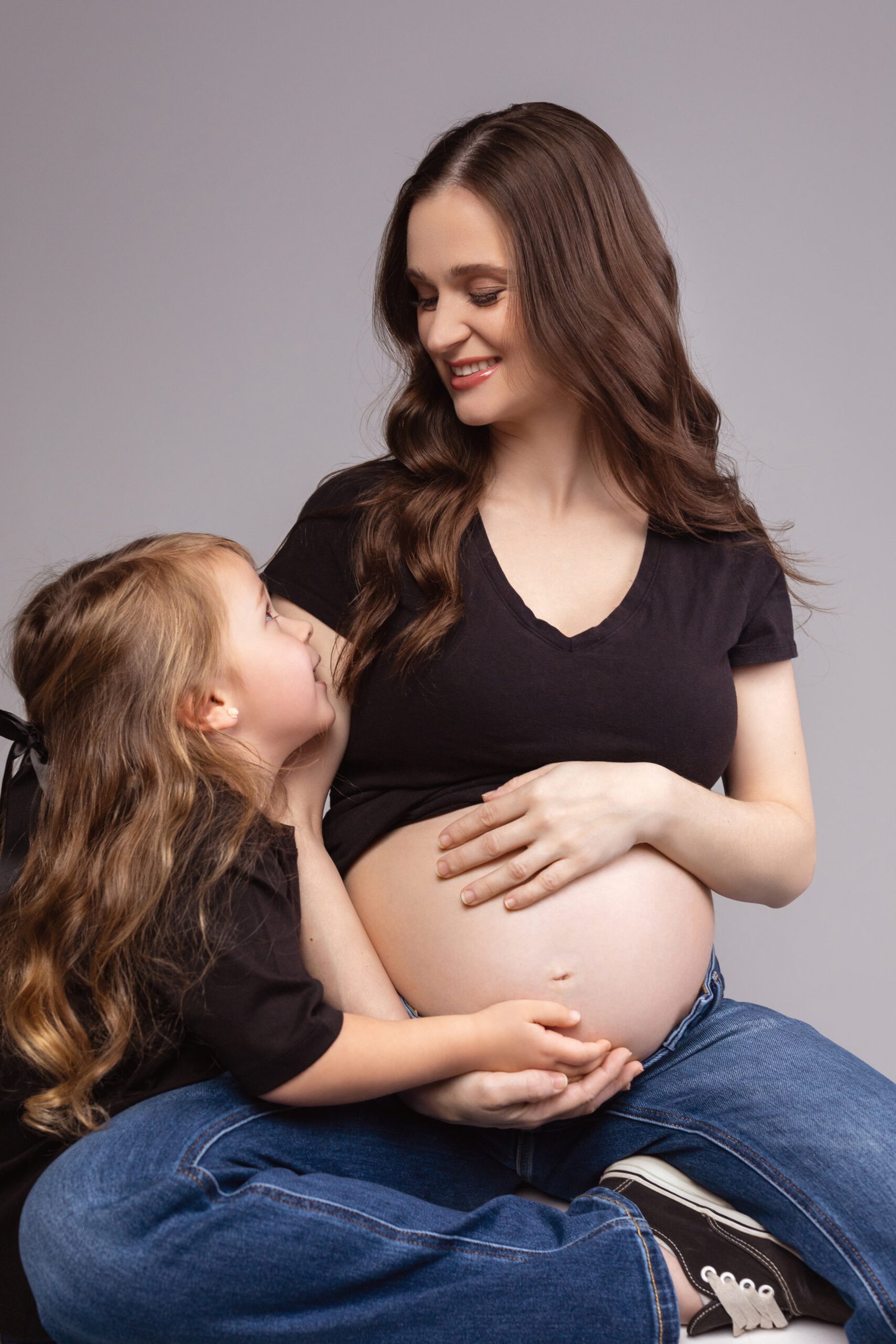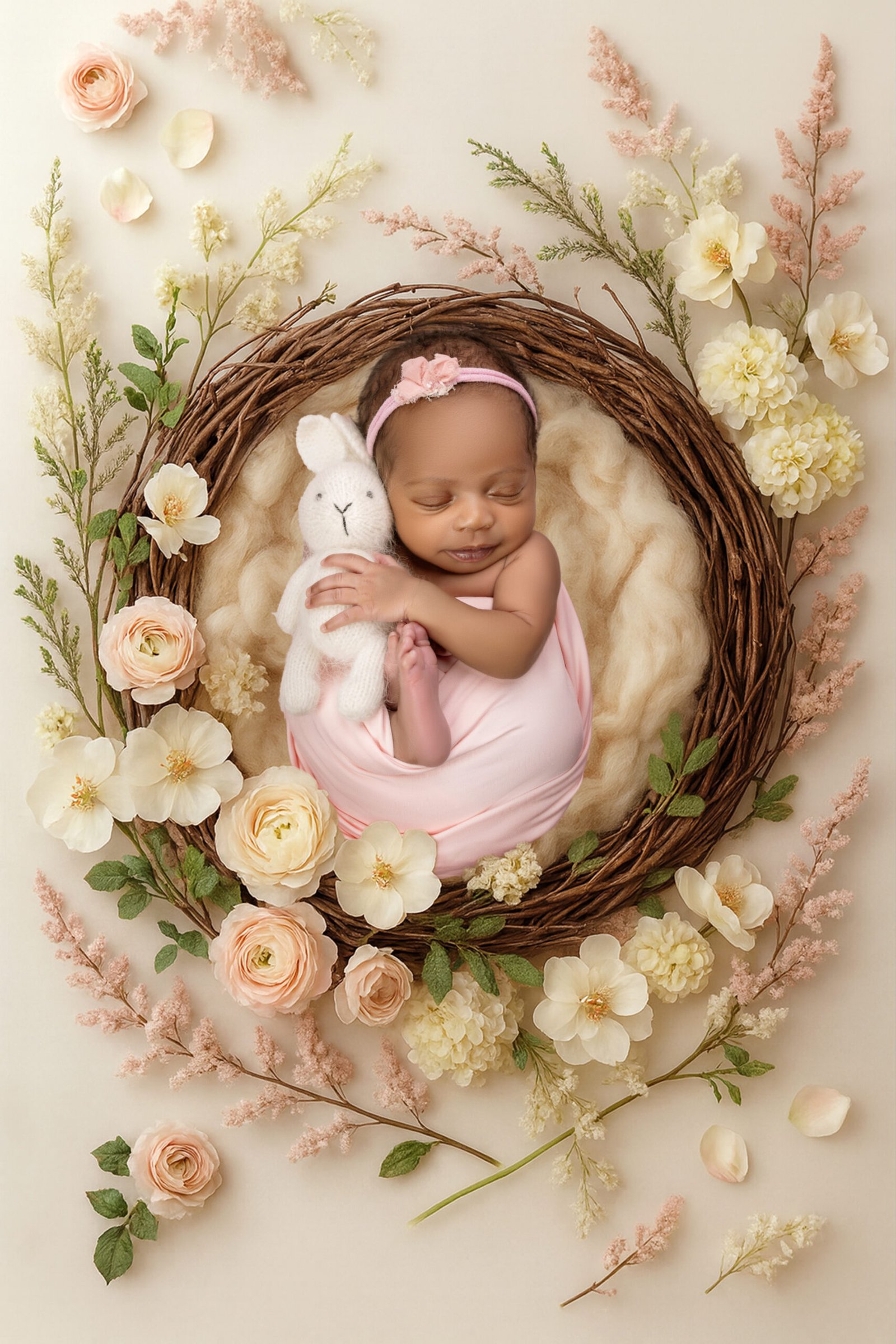
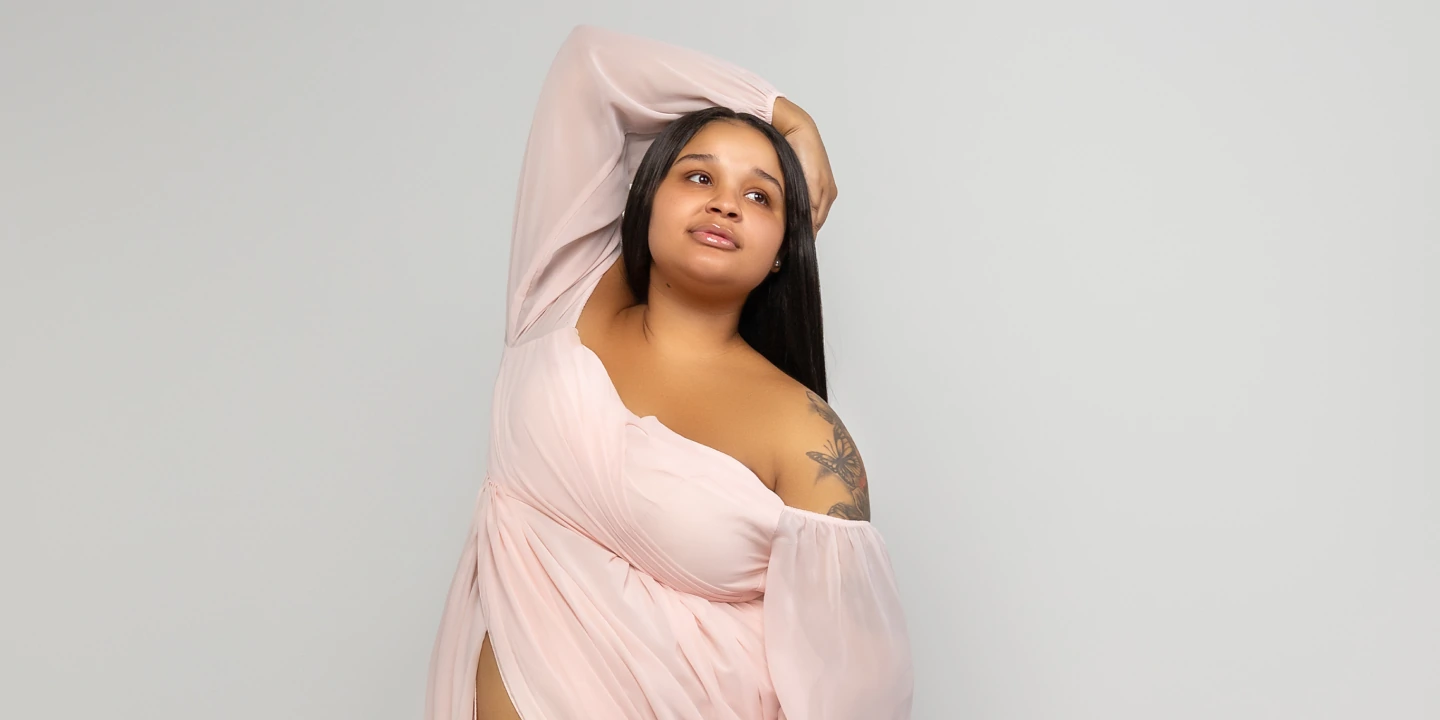
A flowing dress with some movement, in chiffon, jersey or anything with drape, tends to photograph well in almost any color. There is no single right outfit for a Tender Beginnings maternity session in Richboro, PA. Pure white and pure black need extra care under studio lights, but we can make them work.
Browse the homepage to see every session type, or read about maternity photography at Tender Beginnings before you start shopping.
Choosing the Right Silhouette
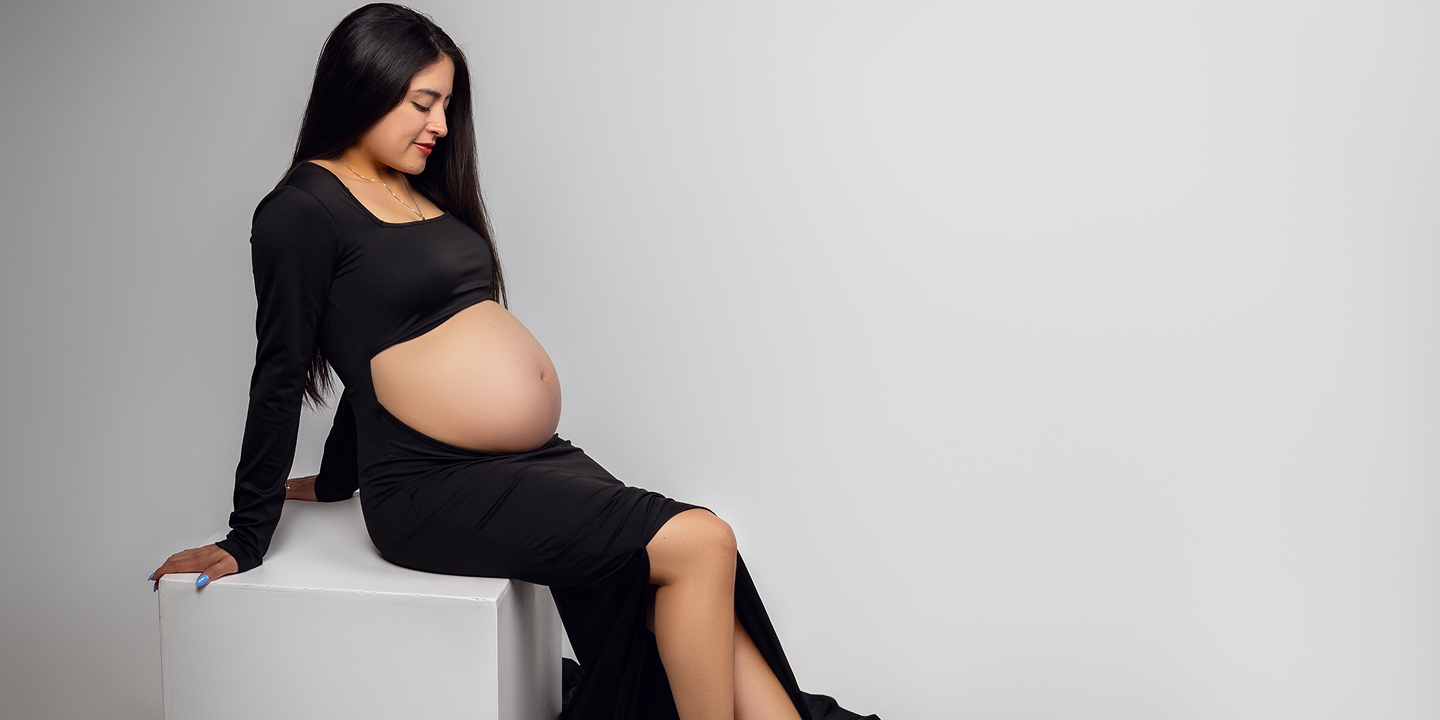
Fit matters more than the dress itself, and it’s the first thing I tell every client booking a maternity session. Look for something fitted through the chest and shoulders, then loose and flowing from just above the belly down. That contrast, structured on top and soft below, draws the eye to your bump instead of hiding it.
Floor-length works best for most of the poses I use. It gives you fabric to hold, swish or drape over one arm, small movements that photograph well and give your hands something natural to do instead of hanging at your sides. A midi length is fine if you want your shoes in frame, but in my experience a floor-length hem looks more graceful in nearly every pose I shoot.
What Colors Photograph Well?
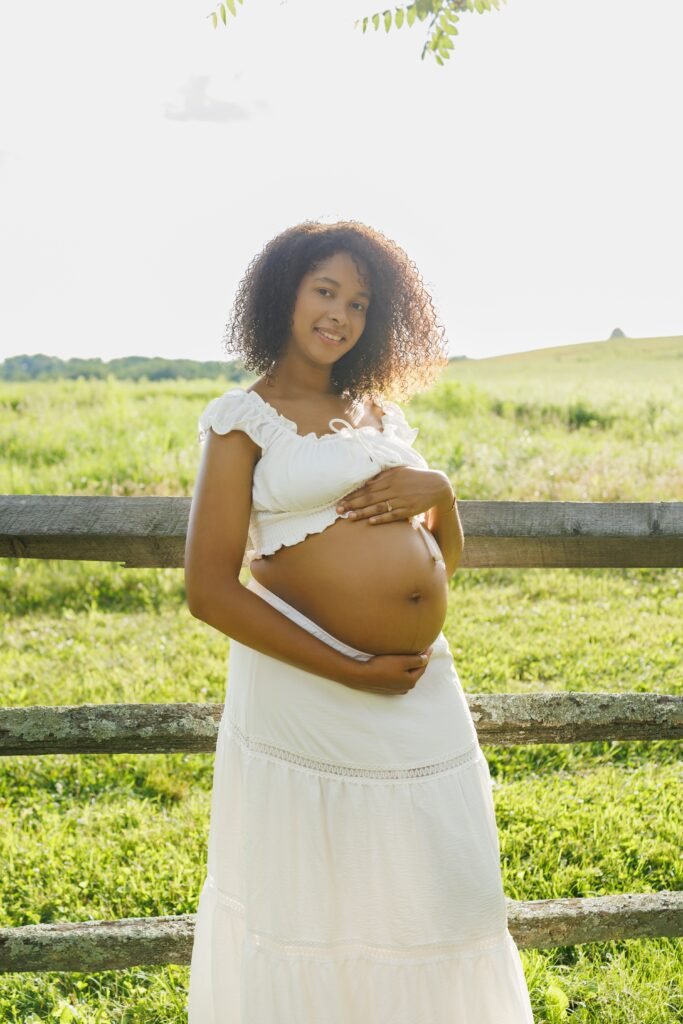
Muted, dusty tones like sage, blush, terracotta and camel are where I often start, studio or outdoor, mainly because they don’t compete with skin tone the way very saturated colors sometimes can. That’s a starting point, not a rule. If you’re drawn to something bolder, tell me and we’ll build the session around it.
Color also works through contrast, and I think about this for every location. If we’re shooting somewhere heavy on greenery, a warm terracotta or rust dress will stand out instead of disappearing into the background. Indoors against my neutral studio backdrop, almost any muted color holds its own.
Pure black and pure white are a little trickier under studio light, which is worth knowing if you’re set on either. Black absorbs light unevenly across fabric folds, which can flatten texture and hide the curve you’re trying to show off. White reflects so much light that it can shift toward blue or gray, and that is hard to correct without dulling skin tone. If you love white, a soft ivory or cream gets you a similar look without the color shift.
Fabrics That Move and Flow
Chiffon, jersey and rayon blends catch light and move with you, which is exactly what I need for a session built around gentle motion: walking, turning, holding your belly. Stiff cotton and heavy structured fabric tend to look flat in photos and can wrinkle within the first few minutes of a shoot.
I’d also steer you away from tight, clingy synthetic fabric. It looks fine standing still, but it clings unevenly the moment you sit or turn, and it shows every seam and bra line underneath, which I can’t always fix in editing.
If you love a printed dress, keep the pattern small to medium in scale. Fine, high-contrast stripes or checks can create a shimmering distortion in photos called moiré, a quirk of how camera sensors read repeating patterns, and one I can’t always correct afterward. A loose floral or a subtle textured weave avoids the problem entirely.
Styling for Studio or Outdoors
The setting changes what works, and I plan for it differently depending on where we’re shooting. In my studio, lighting is controlled: I position a softbox to one side to create gentle shadow and shape, so even a simple, solid-color dress has real depth under that light.
Outdoors, the sun does that job for me, usually best in the last hour before sunset, so fabric with some sheen or movement catches that warm backlight well.
Coordinating Family Outfits
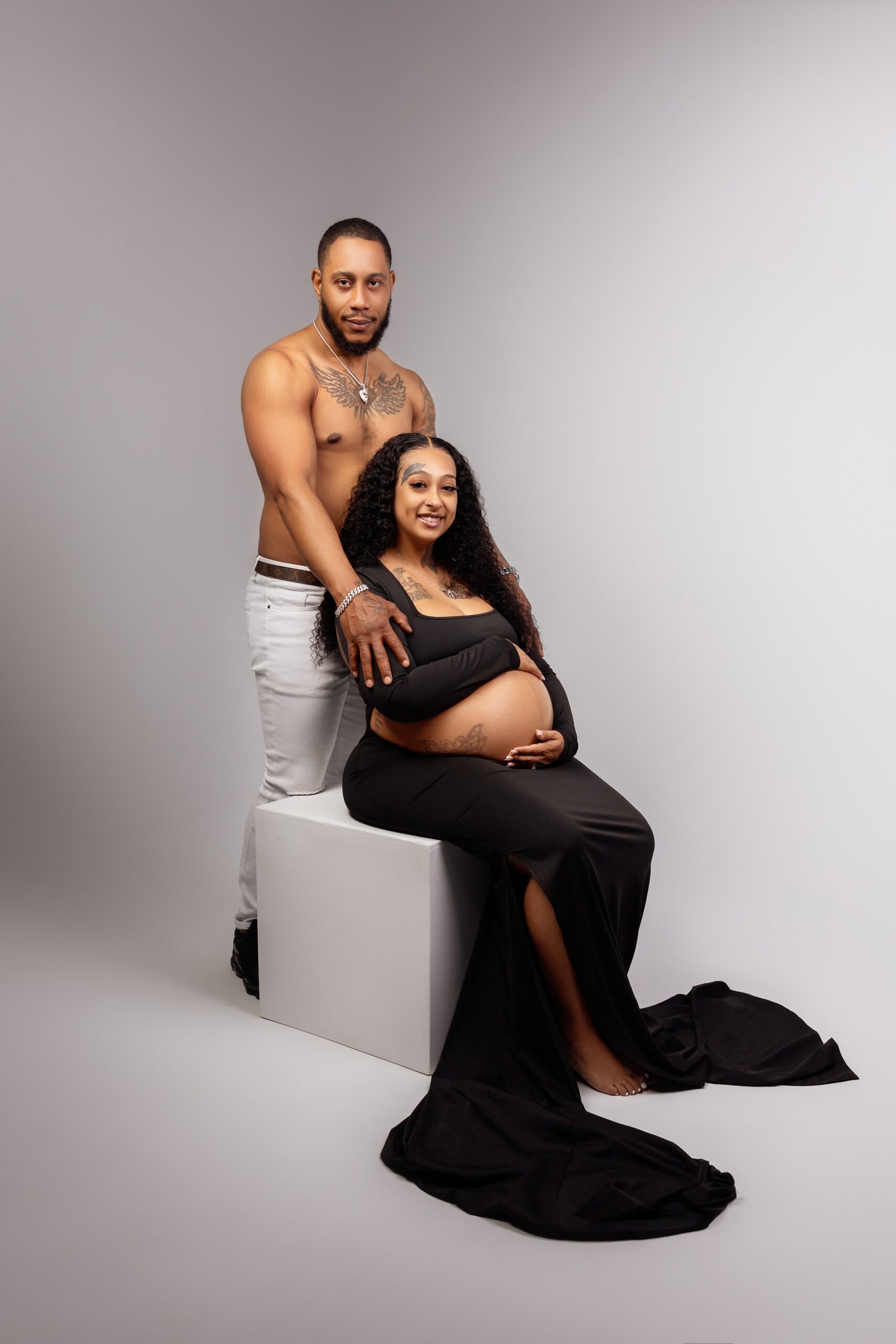
If your partner or other children are joining you, I recommend coordinating rather than matching. Matching head-to-toe tends to flatten a photo in my experience, because everyone blurs into one shape instead of standing out as individuals who belong together.
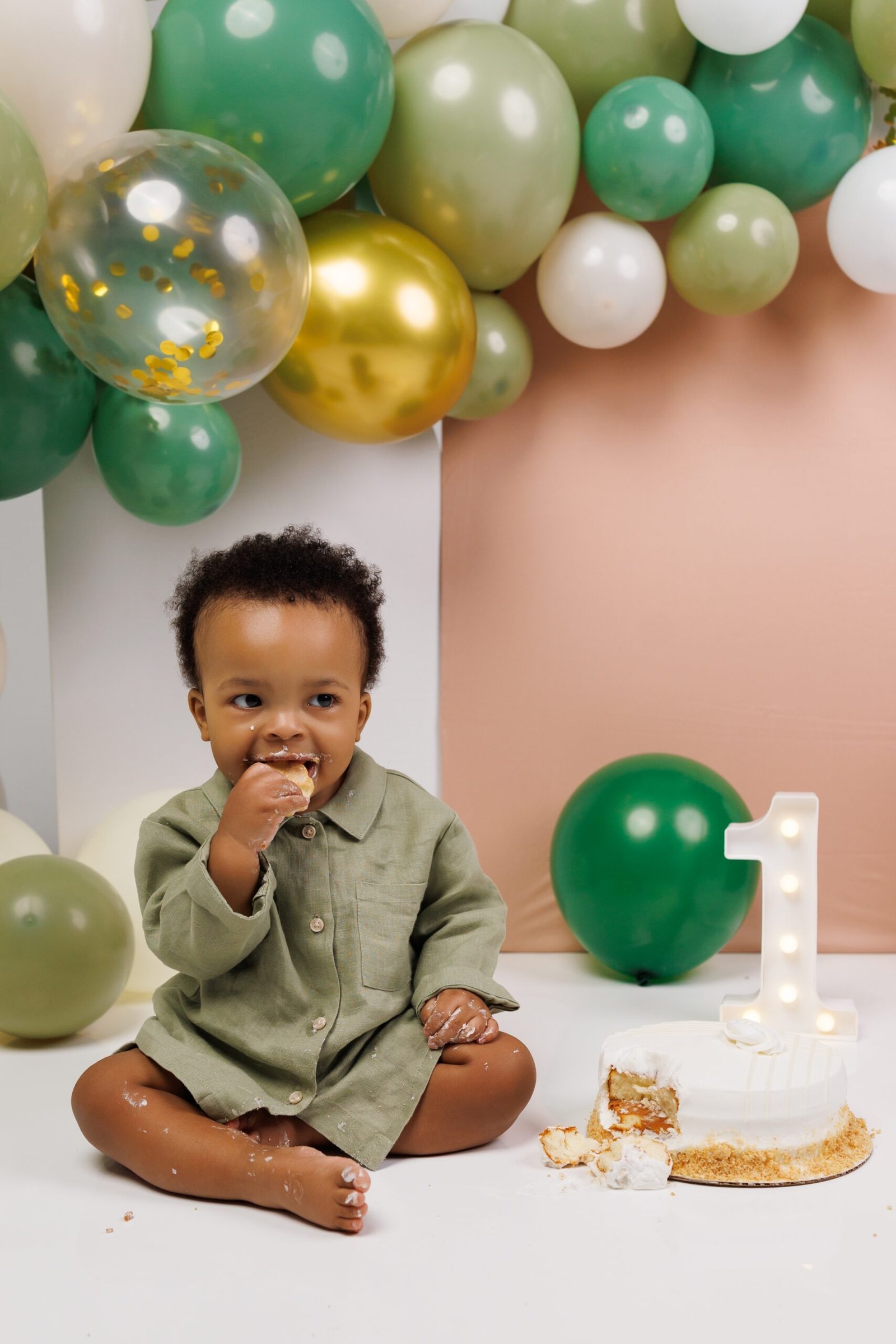
Pick two or three complementary tones and let each person wear a different one. A partner in a soft olive button-down and a toddler in cream both sit comfortably next to a blush maternity dress, without competing with it or with each other.
Flattering Poses to Try
Turn your body at a slight angle to the camera rather than facing it straight on. This alone is the biggest change I see make a difference for moms. A three-quarter turn, one hand cradling the bump and the other resting gently below it, is a pose I return to constantly because it’s flattering at almost any stage of pregnancy.
Shooting from a slightly lower angle, looking up, elongates the body and adds a soft, cinematic quality I like. It’s a small technical adjustment on my end: a longer lens at a bit of distance compresses the background and keeps the focus on you, without the wide-angle distortion a phone camera would introduce up close.
Accessories and Undergarments
Keep jewelry simple. I usually suggest a delicate necklace or just your wedding rings, since anything large or reflective tends to pull focus away from your face.
For undergarments, go seamless and close to your skin tone. Visible bra straps or panty lines are one of the most common retouching requests I get, and the easiest thing to avoid from the start.
Using My Studio Wardrobe
You don’t have to solve all of this with your own closet. I keep a maternity wardrobe in my studio, with flowing gowns, wraps and simple pieces I’ve already tested under my own lighting, available to any client who books a session. The Standard package includes three outfit changes and Premium includes four to five, so you can mix your own pieces with mine. You’ll find the full breakdown on my pricing page.
Frequently Asked Questions
What colors photograph best for maternity shoots?
There’s no single best color. Muted, dusty tones like sage, blush, terracotta and camel are easy to work with in almost any light, so I often start there. But if bright or bold is more you, that works too. It’s about what makes you feel like yourself.
What is a good dress for a maternity photoshoot?
I look for a floor-length dress that’s fitted through the chest and flows loosely from the belly down, in a soft fabric like chiffon or jersey. Fit and fabric matter more to me than the specific brand or price point.
What color dress is best for a maternity shoot?
It depends on your setting, skin tone and what you’re drawn to. Blush, sage and soft neutrals are reliable across a lot of locations and lighting, but plenty of moms go bold, and it photographs just as well.
What poses are flattering for maternity photos?
A three-quarter turn with one hand cradling the bump is the pose I come back to most often. Shooting from a slightly lower angle also elongates the body and adds a softer look.
Related reading: Ready to pick your poses? Maternity photoshoot poses covers what to do with your hands. Still choosing a setting? Studio or outdoor maternity photos breaks down the difference.
Narrative close: You’ll wear this dress for twenty minutes, but you’ll look at these photographs for the rest of your life, so choose the outfit that makes you feel like yourself, not a costume. If you’d like styling help ahead of time, reach out before your session, or read what other Philadelphia-area moms said about theirs in my reviews.